

Australian retirees often anchor spending to dividend cheques and franking credits. That anchor feels tangible—cash arriving in known months—but it confuses accounting income with capacity to spend safely. Payout ratios shift when boards conserve capital; sectors cluster distributions in September and March; buybacks replace dividends without improving cash flow planning clarity.
Volatility hiding inside “blue chip” income
Concentration in banks and miners has historically delivered attractive grossed-up yields, yet both sectors exhibit earnings cyclicality that propagates into dividends. Clients who funded recurring gifts or property costs purely from dividends experienced step-downs that growth in share prices did not immediately offset psychologically—because spending was tied to cash, not total return.
Our house position
At URIAH INVESTMENT PTY LTD we model retirement cash flow in layers: essential expenses covered by stable sources (cash ladder, short defensive holdings, annuities where already chosen by client), discretionary spending linked to total portfolio outcomes with explicit rules, and legacy growth assets not earmarked for next-year spending. Dividends feed the system but do not define the system.
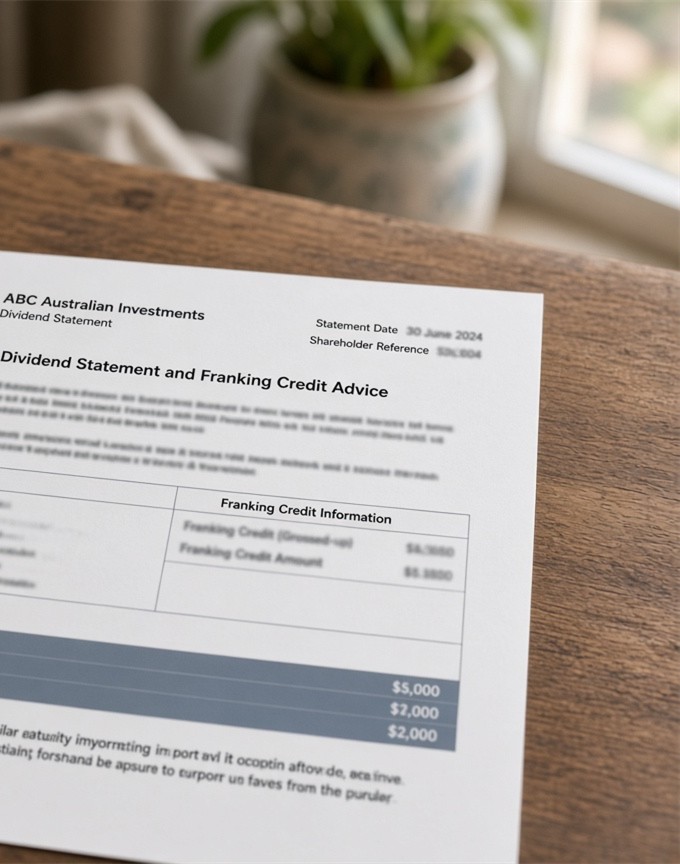
We also separate franking credit entitlement from spending capacity. Tax outcomes belong in conversations with your registered tax agent; our reports show estimated cash and franking components so those conversations start from consistent numbers.
Implementation lessons from client work
Where we have restructured income-focused portfolios, the hardest behavioural shift is accepting that selling growth units to fund spending when dividends dip is not “failure” if the IPS allows it. Without that permission, clients hoard cash at low rates while refusing to trim overweight positions—an implicit bet on dividend restoration timelines.
Checklist for IPS reviewers
- State minimum months of essential expenses held outside equities.
- Define maximum sector weight for dividend-dependent spending.
- Document whether share sales are permitted to top up income shortfalls.
- Report income as cash, franking, and realised gains separately.